Episode Transcript
[00:00:00] Speaker A: Before we get into today's episode, I have something incredibly special to share.
[00:00:04] Speaker B: My book, let's Be Diverse, A Practical
[00:00:06] Speaker A: Guide to Leading Through Change, is officially out and available on Amazon.
Honestly, this is an emotional moment for me. This book represents a dream, a journey, personal experiences, difficult lessons, and deep belief
[00:00:20] Speaker B: that we can all make a difference
[00:00:21] Speaker A: in how we lead and how we show up for one another. I wrote this book because we all face uncertainty. We all have moments when we question ourselves, struggle to find the answers, or wonder how we're going to get through a difficult situation. My hope is that these pages remind someone out there that they're not alone, that they have the courage to keep moving forward, and that even in the most uncertain moments, there's an opportunity to grow. And now my biggest dream is to get this book into as many hands as possible.
So I'm asking you to be part of this journey. Head over to Amazon, search for let's Be Diverse, A Practical Guide Leading to Change and grab your copy today. And if you know someone who might need this message, please share it with them as well. From the bottom of my heart, thank you for supporting me, believing in me, helping me bring this dream to life. It truly means more than words can say. Let's get this book and as many hands as as possible, because you never know whose life might be touched by a message that they need to hear. Now, let's get on to today's episode.
[00:01:32] Speaker C: Opinions expressed in this episode are personal. They do not necessarily reflect the views of this streaming platform.
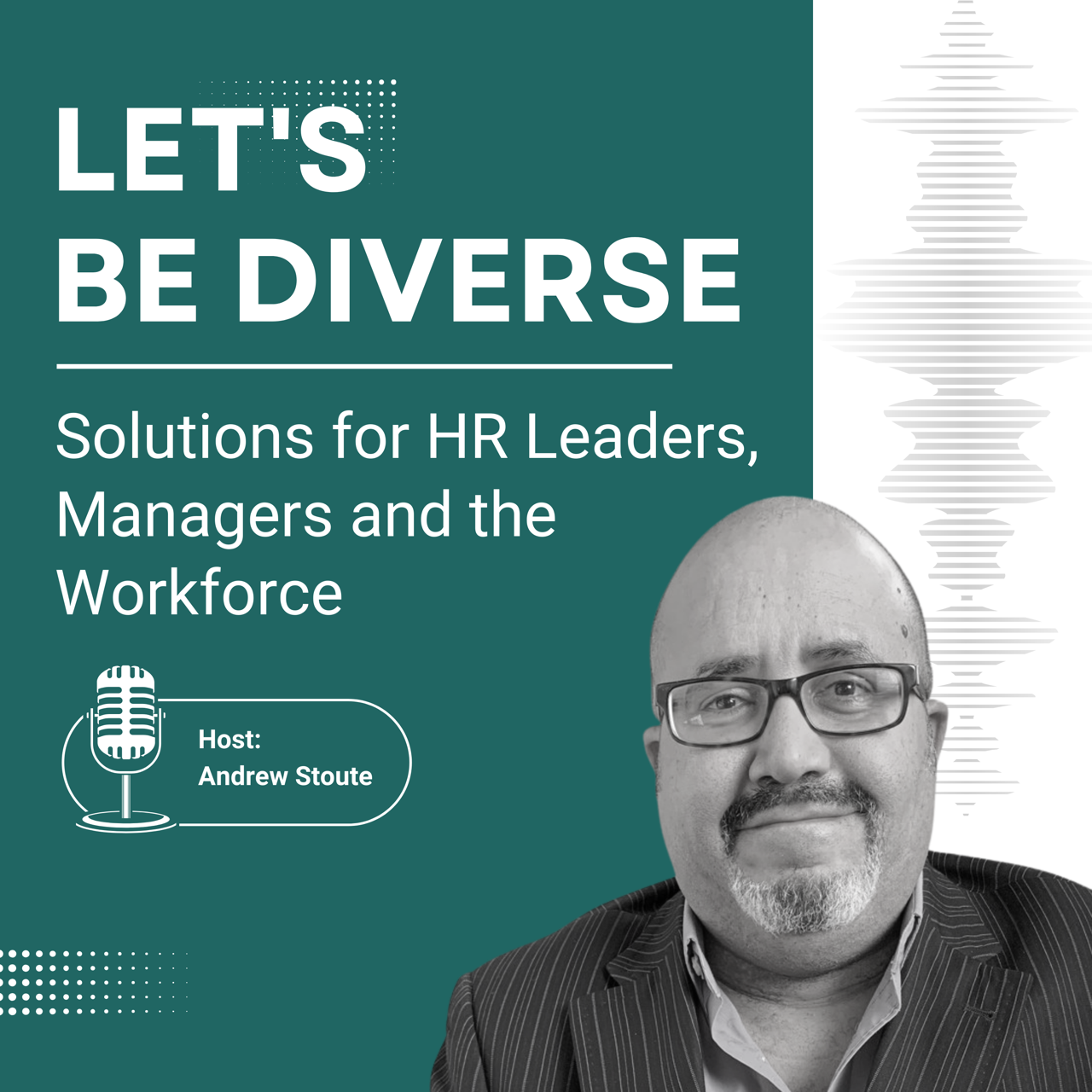
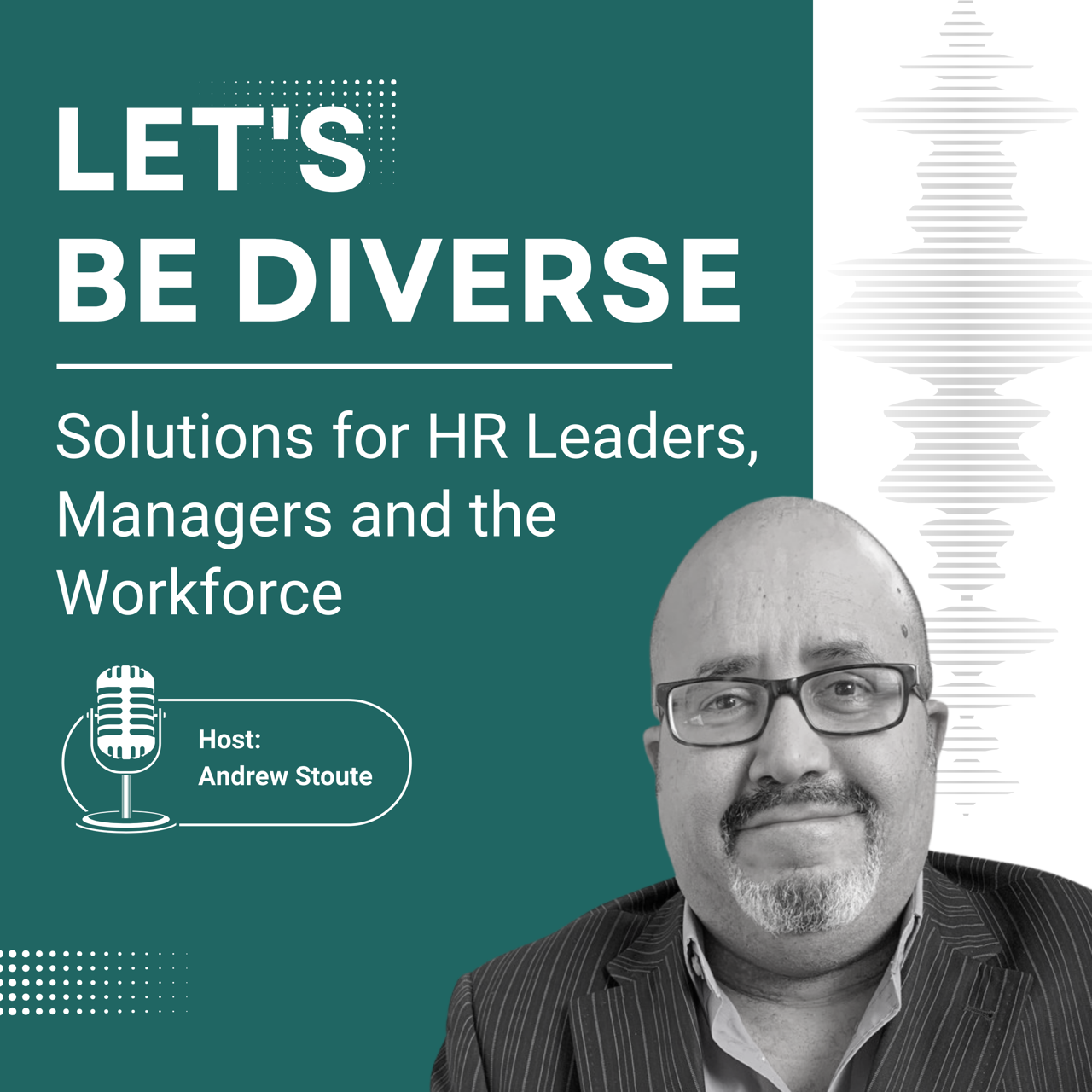
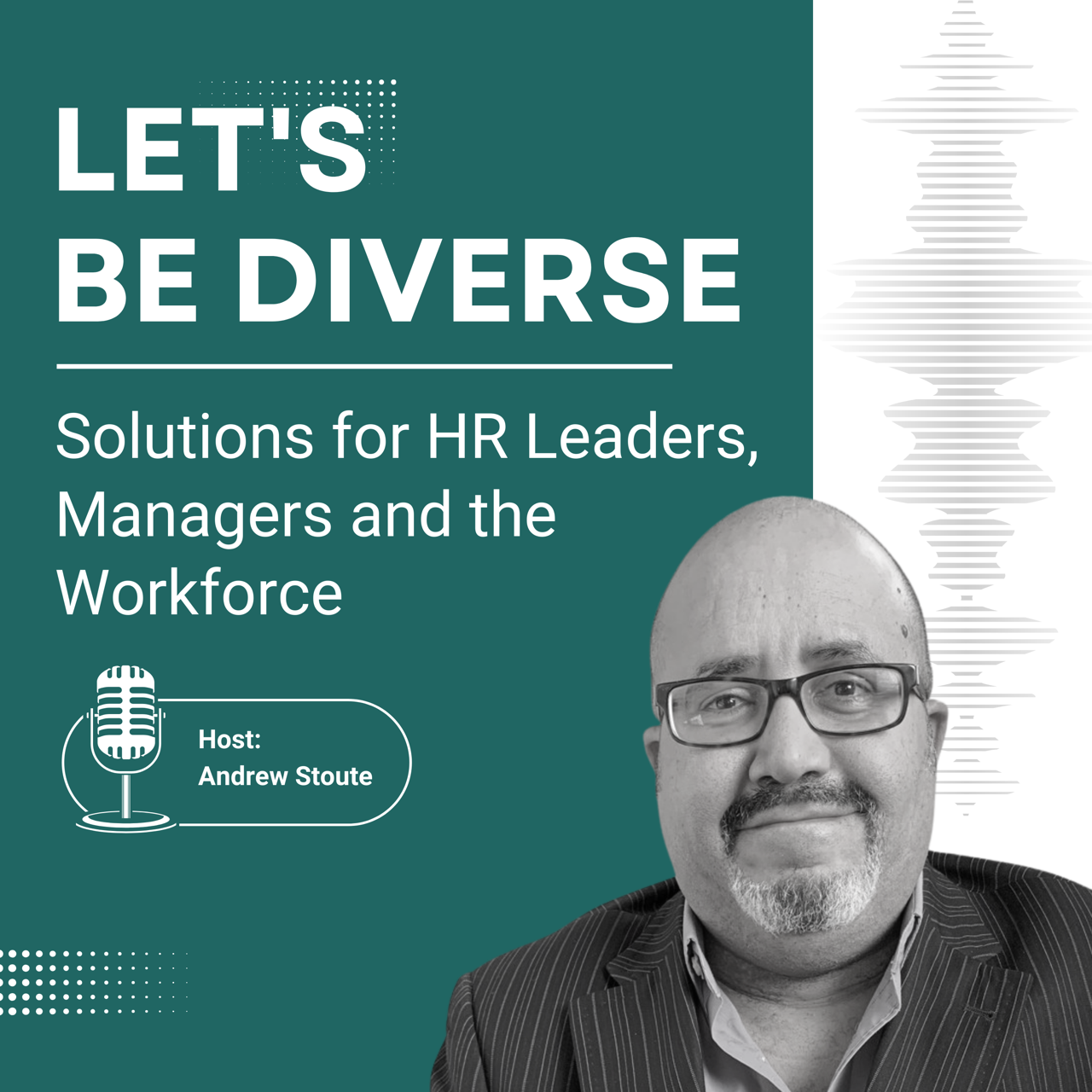
[00:01:42] Speaker B: Good day, wonderful people, and welcome to another edition of let's Be Diverse. I am your host, Andrew Stout. This episode is dedicated to all my loved ones who've supported me through this journey. Those who have left us will always be in our hearts and will never be forgotten. Our topic today is no Plan B. Finding Purpose. When Life Changes Everything.
Our guest today is someone that I truly admire. Her name is Yvonne Marie Garvey.
[00:02:10] Speaker D: Hi. Thanks so much for having me.
[00:02:12] Speaker B: Thank you so much for joining us today. How are things with you? What's new in your world? Gimme the tea. Give me the deets. Give me it all. What's going on?
[00:02:19] Speaker D: Well, today being October 1st begins blindness awareness Month, actually, so it's for the entire month. So it is an exciting month for anyone that does any work in the vision community. It gives us an opportunity to tell our stories and start the conversation about what it might like, life might be like living with a visual impairment. So I've got a lot of different speaking gigs and podcasts and interviews lined up for the month. So this is a perfect way to start it off.
[00:02:47] Speaker B: Thanks for joining us. So, before we begin, I always have a fun, thought provoking question that I ask all of my guests to get things going. Are you ready for yours today?
[00:02:57] Speaker D: I think so, yeah. Let's hear it.
[00:02:59] Speaker B: Okay, so my question to you today is what cartoon character exemplifies you in your culture or character as a human?
[00:03:10] Speaker D: I was not expecting that. I don't. I'm going to need a minute, I think. Yeah, that's okay. I was just, I was just talking to a friend I had. There's a picture of me that I use sometimes when I do motivational talks. And it's a picture of me as a kid with these massive glasses in this terrible mullet. And my friend said, oh, you look like the, the Jeanette, the girl chipmunk with the big glasses.
[00:03:33] Speaker B: But that was then.
[00:03:34] Speaker D: There's been so many different versions of me in my, my 45 years on, on Earth.
So I don't know what I would pick today. I don't watch a ton of cartoons anymore either.
[00:03:45] Speaker B: We don't as we get older, for sure, I guess.
[00:03:47] Speaker D: Yeah, I don't, I don't have an answer for that, Andrew.
[00:03:50] Speaker B: That's okay. You know what?
There are, sometimes there's right or wrong answers. Sometimes we don't have an answer. Maybe during a conversation you will come back to it and you will say, hey, earlier this is what you asked me. Now I know what to answer. So that's totally, that's, that's totally fine. We're cool with that.
[00:04:08] Speaker D: Okay.
[00:04:08] Speaker B: Thank you for having fun with me right now, but we'll say it in the future as well. Thanks for having fun with me as far as that goes to get us started. Yvonne, who are you and what drives you to do the work that you do?
[00:04:20] Speaker D: So I have a lot of different roles. I originally, I am an entrepreneur. I have ran my own business for about 15 years. But in the last five years that's changed a lot and it's expanded bandage. So because of my visual impairment, I have a disease called retinitis pigmentosis. Things had to shift a bit. And then on top of that, I am an alcoholic. A sober alcoholic, but a blind sober alcoholic. So a lot of things have changed in the last five years. I was diagnosed eight years ago. So as a result, now I am a yoga instructor. I'm a meditation coach, a Reiki practitioner. I still have my, my business, my communications business, but I'm also an advocate for the blind and a passionate member of the recovery community and an author. I was able to publish a book just under a year ago, so that's some something else that I'm also embracing wholeheartedly. And some of this work is paid and some of it's volunteer, but it's all just as important.
[00:05:17] Speaker B: It certainly is. For sure. Anytime you get an opportunity to speak and tell your story, I truly believe it is an opportunity to storytell. And when you're a business owner, yes, you want to talk about your, your business, what you're doing, what make what works, what doesn't work. If you're a leader, you want to talk about how you lead, but there's no other way to start to storytell, to tell people about you and what you're all about and have people seeing you in a different lens for me is super important.
So your life took some turns you never could have planned for. When you look back, what did those unexpected chapters teach you about resilience, identity, and the person that you are becoming?
[00:06:00] Speaker D: So I think when you say the word resilience, a big part of that word for me is willingness to change. Right? You can't stay the same and make it through. In my opinion, when you, when you do have life challenges and major changes that you have to, to meet head on. So for me, when I first found out that I had this eye condition, there was no, no symptoms that I could notice because it was a slow progression over time. I didn't even realize what it was that I wasn't seeing. I was driving, and then two weeks later, I was legally blind.
So that was a really big thing in terms of identity and some adjustments in and around how I got around in the world. But the, the other piece is, you know, you didn't, you don't sit there and think that I'm going to be blind when I grow up. And then when you add in the alcoholism with it too. I always drank heavily, but I never thought it was going to get to that point, that rock bottom. So there was. When you're finally like, you find your rock bottom and you are a legally blind alcoholic drinking alone in your condo, you've gotta make some choices, right? Like my health was starting to be impacted, my family was worried, my business was starting to be impacted. And so for me, it was an all or nothing thing. I had to go into detox, get sober, start that work. And then about a year after that, in sobriety, I was like, yeah, I'm blind. I forgot to deal with that. I Went on a four year bender after I got diagnosed and never addressed any of those issues.
You know, getting around safely and dealing with that new identity and what it could look like because it is a degenerative illness. So down the road there could be more blindness and less vision. So for, for me, you know, resilience is a huge piece of it. But keep moving forward and trying not to dwell on the what ifs and how awful things might seem because they're really not that bad in a lot of ways. Nothing really did change when it comes to the actual vision loss. Right. It was just me changing inside. It was really much a very big inside job.
[00:07:56] Speaker B: So listen to your story.
The things that have come out to me is that first of all you talked in about should and I know that we shouldn't should on ourselves and we shouldn't look back at what ifs. I know it's sometimes it's hard to do that, but I. You also changed your mindset. And I think that's important for the listeners out there that are leaders that sometimes in our, not just in our professional lives, but in our personal lives, we have to change our mindset as well. And that's going to help us in our professional lives and our careers because they both have to fit. If one is not going well, then the other one is going to suffer and vice versa. As you saw with your, with your business and the thing that you were, you were trying to do.
[00:08:41] Speaker D: Yeah, absolutely. And I think that, you know, people, people can change, but if you also, if you're always thinking that you can't, you're never going to be able to. Right. I have a yoga instructor and she' always says you're, you're never gonna see magic if you don't believe in it. Right. Like you, you have to wake up with that positive mindset and think that the day is there for the taking and go with it. And then if, if you lose focus throughout the day, you just start over. I find a nap and a bite to eat really helps.
[00:09:11] Speaker A: For sure.
[00:09:12] Speaker D: Yeah, for sure.
[00:09:13] Speaker B: Food is always a good help.
[00:09:14] Speaker A: For sure.
[00:09:15] Speaker B: No matter what you're doing.
[00:09:16] Speaker C: For sure.
[00:09:17] Speaker B: One thing Yvonne, I find fascinating about your story is how much we can assume about someone without knowing what they really actually carry. What are some assumptions people have made about you and what do you wish they had asked instead?
[00:09:32] Speaker D: So there's a couple of things, you know, being a blind alcoholic, there's two tiers to that, right. Like there's a lot of assumptions people make about alcoholics that we're just morally bad people. Why don't we just quit? Why don't we try controlled drinking? Like, that's a really nice one, right?
And it's, you know, like, it's not. It's not. That's not. It's not what it's about, right? You have to understand what it's like to be at that rock bottom. And if you look at addiction, it doesn't discriminate. Like, it hits everybody, whether you're wealthy, successful, or homeless. Like, the whole thing is hard on all of the people, right? So try not to judge too harshly when you don't know what someone's going through. And there's a lot of components too. Like, it's not just a.
A compulsion to drink. There's a physical component as well. And then on the blind side of things, did a little pun there. Didn't mean to. But there's Blindness really is a spectrum, right? So everyone's vision loss looks different. I have no peripheral vision, so I have extreme tunnel vision. It's like almost like looking through a paper towel roll. So I can look at you straight in the eye and have a great conversation, and I can see you, but if you outstretch your hand for me to shake it, I won't see that, and I'll ignore your hand.
Whereas, like, I have a friend who's got absolutely no central vision. So she can see what I can't see, but she can't see what I can see, right? So we would joke together. We could drive. We're not gonna do that. That would be wildly dangerous. But so to keep in mind that not all vision loss is the same and that you can't really make assumptions. So, like, I know when I first started to identify as someone visually impaired and using my cane to get around, I need that cane to get around in a mall or a grocery store because I'm going to run into you, right? And people will assume that I'm rude and I'm not paying attention if I'm not using my cane. But then I'll go and look through a rack of clothing, and people will be like, well, she can see. She's a fraud, right? Or they're not even thinking about me at all, and I'm making all these stories up in my own head. It's really none of my business what anyone else is thinking. But if you're not sure, just ask the question. Start the conversation. October is a perfect month to do that when it comes to vision loss, because everyone that I've met in the community. We're happy to talk about it. Right. Like, it's, it's a conversation that we'd like to be part of from the beginning, not way later.
[00:11:51] Speaker B: Yeah. And when you're talking about when you're hitting rock bottom, we just never know what somebody is going through, what somebody is dealing with. So to assume, like you said, she can see the clothes, we shouldn't assume that just because you can see the clothes. Like, there's so many different scenarios to what you could be, what you deal with on a daily basis that we would never understand or many would never understand. Only you would fully understand that. Let's give her some kudos instead of assuming the bad of everything. Right.
[00:12:21] Speaker D: I do get a lot of people that are like, oh, you read really well. And it's like, yeah, I can still read. Like it's, you know, it's. But, you know, you're not going to put me out on a bike because I'll, I'll hurt myself and probably cause a lot of serious accidents, right? Yeah, it's just, there's just a lot of different moving parts with it. And then the other thing, when you go to that assumption about rock bottom with alcoholism too, it might look like I'm okay because I haven't lost my housing. Right. And obviously, like, I'm not posting the pictures of me really, really sick on my bathroom floor morning after morning on social media so people can see it. Right. Like, when you hit that really, like, lousy rock bottom in alcoholism, it's not fun in parties like it used to be for me when I was younger. I could disguise my drinking as a party girl so people don't see what's behind closed doors. It's not something people talk about because there is so much shame in being an alcoholic for sure.
[00:13:12] Speaker B: So, Yvonne, let's bring this into a workplace. What does genuine inclusion look like for someone living with a disability or navigating something others may not be able to see? And what are organizations still getting wrong?
[00:13:26] Speaker D: I think that there's a massive underestimation with people that are dealing with vision loss or any disability. Right. Like everyone I've met in, in the community of, of the disabled or people with vision loss, we, we adapt so quickly and find a different way of doing things. We'll get there and we'll find a different way of doing it, but you'll really get to see how smart, clever, and resilient people are. And then I think the other big piece that a lot of people don't Think about is if you do have someone in your workforce or if you're considering bringing someone onto your team and you have questions or you're unsure about something, start that conversation right from the get go. That's when we want to be included. Not after all these decisions have been made and now you've got a policy that doesn't apply or work for anyone. Because we would like to be. You really should be including people that are part of that decision making process before, not after. Right. The people that are going to be most impacted about it. And then the same goes too for the recovery community. Anyone that's recovering from an addiction, it doesn't make them a bad person. And if you, if you're able to help support them in getting sober, sober, you're gonna have like a really, really loyal employee for life. Right. And you're gonna see them, you know, excel in ways that regular people may not. And it's more like an illness. It just has so much shame over it. Right. You're not gonna fire someone because they have cancer or question why they don't perform as well at work because, you know they're sick. It's just ending some of that stigma. But that, that being said too, if you are someone that is in that, that situation, the onus is on the person. Like, we have to want to change, we have to want to get better, do better. And
[00:15:04] Speaker B: yeah, I always say if, if you're bringing somebody or you're giving somebody a seat at the table, make them feel welcome to sit at that table. So what? Everything you said there makes total sense to me. If we're bringing on somebody, ask the questions, have the conversation, and like I said, make them feel welcome and make them feel seen, heard, valued and understood so that they feel like they are part of the team.
[00:15:29] Speaker D: Yeah, absolutely. And I'm a member of the Canadian Council of the Blind. And one thing that we tend to do is we want to include everyone into the community. Because with vision impairment comes isolation. It's harder to get around. It can be very awkward. Being out when you have no vision. Doing things that everyone else does is just not the same. So we try to have as many group events as we can so people are heard and seen and doing things and feel like they belong.
[00:15:55] Speaker B: We kind of touched on this a bit, but I want to kind of delve in this a little bit deeper here. Yvonne, your story also touches on addiction recovery and shame and rebuilding. What do you think? We are sometimes so quick to judge someone's struggle instead of trying to understand the person behind it.
[00:16:13] Speaker D: So I think it's part of the reason why addiction is. Is judged so harshly is it's. It's misunderstood. Right. People. People don't necessarily have all the facts and the information that they need to.
To see what's happening. And addiction. The symptoms of addiction tend to burn people's lives down. Right. Or other people's lives. So, you know, when. When you're in the throes of it, you may get a DUI or hurt someone else or lose your job. The destruction is very visible. And it seems like a lot of poor decisions, which it is, but there's a lot of other stuff that's fueling those poor decisions. So I think that there is a little bit of a misunderstanding about it. And people that don't suffer from it, they just think, why can't you stop? I can have just one. Why can't you have just one? Right? And so it's hard to imagine what it's like. So try to do your best to put yourself in someone else's shoes. And the reality is, is we all know someone, Whether it's someone. Someone that you know really, really closely, or someone that you know loves an addict or an alcoholic. Like, it touches everybody. Right. Just not everyone talks about it as much as maybe I do. But for me, it was just such a profound change in my life. Like, if you.
I talk about this in my book, Stumbling Blindly Toward Grace, it's. I shouldn't even be alive from some of the things that I've gone through and decisions I've made. So now that I am alive, I. I do want to share everything that I've been given and. And tell people that there is a better way and there's a community out there for you. You, if you want to. If you want it. Right. It's just right there. You just have to go after it and not worry about the shame. Because one thing that I did when I first got sober, I told everyone about it, and either you're on board or you're not. You're in or you're out, and people are in support of. Everyone wants a success story, right?
[00:17:56] Speaker B: Yeah. I was having a conversation with somebody the other day, and they were talking about their company wanting to put together a mental health support program within the organization. And they wanted to have meetings set up once a month with people to give them an idea of what mental health could actually mean. And she had somebody on her team who came to her and said, hey, I need to participate in this because I Don't suffer from mental health, so why do I need to go through that? And she had said to them, well, you may not be dealing with or going through anything mental health wise, but if you can understand just a smidgen of what some of your co workers could be dealing with, the assumptions might reduce quite a bit if you understood it a little bit. Yeah. So when she said that, he said, okay, I, I didn't look at it that way. Okay, well, you know, let's, let's do it.
[00:18:54] Speaker D: There's some empathy. And let's not forget too, they may not have any mental health issues right now. I don't think any of us are completely immune to, to this sort of thing down the road. Life happens, life gets lifey and all of a sudden you're, you've got some circumstances in front of you and you may or may not have the tools to deal with it, but definitely the empathy, like, you know, like, why wouldn't you want to help your team members?
[00:19:15] Speaker B: Yeah, it's the trigger, right? Everyone's triggered by something. Yvonne, there is a powerful connection between your story and the idea of belonging in your mind. What does it mean to truly feel seen, heard, value and understood when your life doesn't look like everyone else's?
[00:19:31] Speaker D: So I really felt, when I first went into the rooms of recovery and sobriety, I was immediately welcomed. But another thing that I really noticed, once I got a bit of sobriety under my belt, I joined the Canadian Council of the Blind. And here was an organization because I felt really useless at the end of my drinking because I just didn't have the wherewithal to really contribute much to any, anyone or anything in life. And all of a sudden this community that not only did they want me, but they needed me. And I felt a little bit uncomfortable in the beginning because I was just getting to know them. Right. And then here I was able to see people with significantly worse visual impairments and they're okay. So I knew I was going to be okay. Right. And then to feel like I'm needed and that, that there's work for me to do and to have this purpose beyond just living every single day was. Was amazing. And then I do tend to believe too, because I've survived as much as I have and by all rights probably shouldn't have be alive with some of the things I've been through. I do have work to do. Right. Like there's a higher power out there. It's got jobs for me to take on. And, and part of that is is bringing people into community and knowing, like, if you're out there and you are struggling, your community's out there, you just got to go looking for it. They may not come knocking on your door. Everyone's busy. Everyone's got their own things that they're dealing with. But if you reach your hand out for a little bit of help, someone out there wants to help.
[00:20:51] Speaker A: Yeah.
[00:20:51] Speaker B: You needed to change your mindset, and I think people need to change your mindset in that respect. That, okay, this is what I've learned, and here's what I can bring on to people who may be struggling or maybe dealing with it. Everyone's different and deals with things differently, but I can go through what I went through, and I can maybe that maybe they went through the same things and maybe they don't feel alone after hearing my story. So I think that was great that you actually.
That you actually did that and that you joined an organization to help people and to talk to people that could be dealing with the same things that you might have been dealing with.
[00:21:31] Speaker D: And it didn't happen overnight. It took me like, a year and a half of sobriety to be like, okay. Oh, yeah, okay, so I'm blind. And I do have some. Some things I can offer in that regard, too. Right. Like, it's. For me, it's always like, what's the next best thing I can be doing?
[00:21:45] Speaker B: Oh, Yvonne, before we wrap up here, what is one takeaway to our listeners to remember from this episode that I guess kind of.
[00:21:53] Speaker D: It goes a little bit to some of those assumptions that we were talking about earlier? Don't. Don't assume too much. And instead ask the question if you're not sure if you are making an assumption, don't necessarily assume it's a bad thing. Right. When. So I was driving at the end of my. My visual impairment, and. And I was always really stressed out. Like, I'd be on the 401 here, and I'd be changing lanes and be like, oh, my God, I hope I'm going to make it. And then I'd make it here. I just thought, like, maybe I was a nervous driver, but now I'll see people who are getting really angry at other people driving, and I'm like, that person. You don't know what's going on. Right. Like, they. Maybe they can't see. Like, as soon as I got the notification that I shouldn't be driving, I stopped. I realized that that wasn't safe. You just don't necessarily. What's going on behind closed Doors. And then the other thing is, if you're struggling, whether it's with loneliness, mental health issues, addiction, a disability, and you feel like you're the only one, you're definitely not. You absolutely aren't. You know, in the recovery rooms, we call this terminally unique, but we're not really. Right. There's people that have been through it, has a similar story. But it's up to you to go and find them.
[00:22:55] Speaker B: Right.
[00:22:55] Speaker D: You have to find your community, find your happiness. You have to choose it every single day.
[00:23:00] Speaker B: Yeah. In my upcoming book, I talk about being bullied in the workplace. And how I felt alone and how I felt by myself. And how I felt like I didn't have anybody to talk to. So a lot of things that you talk about today, there are some similarities there. And I just felt like I was the only one and I was alone. And once I got through it, then I realized that I wasn't alone, that I could talk about it. And I just felt that shame of, I don't want to talk about this now. I'm like, yeah, I want to talk about it. Because there could be somebody else that could be dealing with it or maybe had dealt with it and didn't know how to handle it. So we just learn along the way about our stuff as far as how we can help somebody.
[00:23:41] Speaker A: For sure.
[00:23:42] Speaker D: Yeah, absolutely. It's a learning process.
[00:23:44] Speaker A: It certainly is.
[00:23:45] Speaker B: Well, listen, Yvonne, I want to take the time to thank you for coming on today. Some of the things that I admire about you is your strength, your balance. You just have some tremendous magnetic energy.
And just your overall compassion and care for people and wanting to help them. I just admire that about you. And it's just been an absolute pleasure to not only meet you, not only have conversations with you like we've had, but also to have you on today to have this conversation.
[00:24:15] Speaker D: Right. Thanks so much for having me. I had a lot of fun, and I wish I could get another chance at that cartoon. I'll send you a message later. When I think of the one that is really meant for me.
[00:24:23] Speaker B: No problem. If I was to pick one, I would definitely pick Wonder Woman for you. That would be the one that I would pick for you.
[00:24:29] Speaker D: Okay.
[00:24:30] Speaker B: Just because of your power and. And your strength. And there's a lot of assumptions about Wonder Woman. So I just think that she would fit you pretty good.
[00:24:40] Speaker D: Okay, well, let's go with that one.
[00:24:41] Speaker B: So that answer is a little bit late in the conversation. So to those are listening. Thank you for listening. You got that answer at the end.
[00:24:49] Speaker D: Amazing. Thank you for that.
[00:24:50] Speaker B: You're welcome. On behalf of myself and my guest Yvonne, I'd like to thank you all for listening listening today and until next time, be safe. And remember everyone, that if we all work together, we can accomplish anything.
[00:25:02] Speaker C: You have been listening to. Let's be diverse with Andrew Stout to stay up to date with future content, hit subscribe.