Episode Transcript
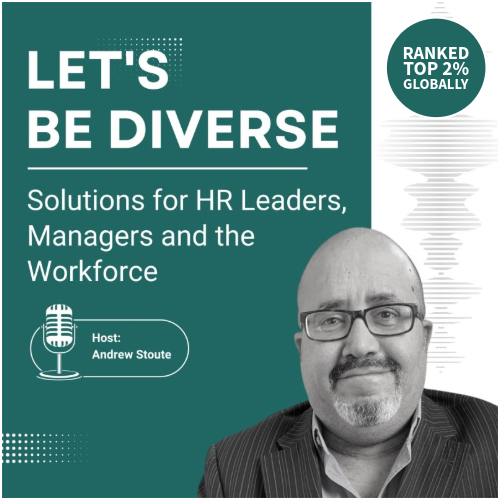
[00:00:00] Speaker A: You have been listening to let's Be Diverse with Andrew Stout. To stay up to date with future content, hit subscribe.
[00:00:19] Speaker B: Good day, wonderful people, and welcome to another edition of let's Be Diverse. I am your host, Andrew Stout. This episode is dedicated to all my loved ones who supported me throughout through this journey. Those who have left us will always be in our hearts and will never be forgotten. Today our topic is healing with trauma with the five cornerstones of resilience. My guest is someone I've known for a while and I'm just super excited to be connected with this person and have them on here today. Her name is Amy Lee Looper. Amy, welcome to the show. So happy to have you on here today.
[00:00:52] Speaker A: Thanks Andrew. Great to be here.
[00:00:53] Speaker B: How are things been? What's going on? Give me the tea, give me the deets. What's going on, Amy?
[00:00:58] Speaker A: Give you the tea spot. My, my 11 year old came home the other day and was like mom, you gotta hear the tea. And I'm like okay. Oh yeah, things are good. I'm in Arizona raising two kids and doing some cool stuff. Helping people overcome adversity and you know, doing speaking and different things in the corporate spaces as well. So life, life is busy. But you know, we always juggle these things as parents. It's just how it is.
[00:01:23] Speaker B: I love the fact that you are, you've got so much going on and you're doing some amazing things. I see a lot of your posts and I see a lot of stuff that you're doing and the work that you' doing is, is excellent and very inspirational for sure. Especially for me and I'm sure a lot of other people that are checking you out. And as far as moms go, people have heard me say this repeatedly. Moms have the hardest job in the world. It never stops. Most of us work at 9 to 5 or an 8 to 4. Mom's job is working 9 to 5 and then in the evening supper, clean up. So it never stops. It's a 24 hour job and I have the utmost respect for, for mothers for sure.
[00:02:02] Speaker A: Yeah. I think parents in all, we all juggle quite a lot. But you know what, that's the gift, that's the blessing. It's like we get to do these things like how it's such a blessing to be able to do that. So yeah, it's all good.
[00:02:15] Speaker B: Amy, I love that you said you get to do that. That's the first. And it's not because mothers don't think that, but that's the first Time. I've heard a mother say that, and that is super inspiring to say that you get to do all those things for your children and for the household. So I love that.
[00:02:29] Speaker A: You know, I'll tell you a story since we're on here telling stories. You know, last year I became a single mother, and there were a lot of years before that that doing laundry, having to pack lunches, having to, like, do all these things is such a chore. Single motherhood totally changed my perspective on everything in life. And when you start to have to, like, kind of sometimes share your time, even if it's just for a weekend or something, like, I don't know, it was really hard. And. And then I started to look at the laundry pile going like, oh, my gosh. I get to do. Fold the tiny laundry. And so I think sometimes when we go through big, big life shifts and challenges, we all go through them, but it is an opportunity for us to. To look at the glass half empty, like, right? It's like. It's like you really get to look at the full picture and see the blessings behind some of the challenges. And it's like, yeah, it's. It's tiring, right? To be on all the time, you have to learn to balance your energy and create time for breaks. And you need to be. Really, be an intentional leader as a parent. But I would say single motherhood was really a shift in my way of thinking of, like, no, I get to make them dinner today. I get to fold the laundry this week. You know, awesome.
[00:03:38] Speaker B: That's awesome. And I'll say this, and then we'll move forward. I did a post a while back about folding laundry and how it relates to leadership, and people tease me about it all the time, but I'm okay with it. One of the most relaxing things for me is folding laundry. I could be watching a movie or a sporting event and just give me a basket of laundry and I can fold it. And I'm one of the most technical folders, so everything's got to be done. And that's probably from my retail days. So all the corners got to be fixed at a certain way, and it just has to look nice. And.
[00:04:14] Speaker A: Yeah.
[00:04:15] Speaker B: And. And so I just. All that practice, but for me, it's just that attention to detail for me is folding everything so I can put it so it fits in the drawer properly for me is kind of what I aim to do. And it's so important to do that and to make sure that it looks good.
[00:04:31] Speaker A: Oh, that's great. Do you have like the shirt folding board, you know that you, you fold over the stuff.
[00:04:37] Speaker B: Don't. I used to have one. But actually, to be quite honest, Amy, I don't need it. And that comes from three years of retail of having to fold stuff and then customers coming in and looking at stuff, looking for sizes, and then having to refold everything. So that's just practice of having to do that. So yes to your answer, but no, I don't need it anymore. Well, thanks so much for joining us and, and having and fun with us. Before we get going, Amy, I always have a fun, thought provoking question that I ask all my guests to get things going. They never know the question that's coming. Are you ready for yours today?
[00:05:13] Speaker A: I'm ready.
[00:05:14] Speaker B: Okay, so your question today, Amy, is if your life had a theme song that played every time you entered a room, what would it, what would the vibe be and why?
[00:05:26] Speaker A: I don't know, probably. And I'm not like the hugest fan of Beyonce, but like, but like, I'm a survivor kind of vibe. I guess it's always like that resilient empowerment vibe that I bring to a room. People just know some of my story and what I teach and coach. And so, yeah, I think that that would be the appropriate answer.
[00:05:47] Speaker B: That is a perfect answer. And I would say a pretty fun, energetic answer because the words in the song are pretty poignant, but the beat of the song is pretty good too. So it's one of those songs that you almost can't do anything to. You can't, but not. But move in that song. Like, you gotta, you gotta get up and you gotta move. For sure.
[00:06:10] Speaker A: Yep.
[00:06:11] Speaker B: So thanks for having fun with us to get us started today. Who are you and what really drives you to do the work that you do?
[00:06:18] Speaker A: Well, you know, I. I am a mama of two girls that absolutely loves developing human beings. And so that's what really drives everything that I do, career wise. I've. I've spent, you know, 20 years in corporate level sell sales, and then I became a founder six years ago and became a coach and a consultant. But at the core of absolutely everything, it's about helping people, developing people, solving complex problems and simplifying those complexities, which over time, you know, took me into trauma work. So some of the work that I do is helping a lot of leaders through challenges like burnout. And underneath burnout, it's not. It's usually some sort of complex, high stress, sometimes traumatic pattern in people's lives. And so when we go through and we do behavior and leadership coaching, transformational coaching. We have to really get into the nitty gritty of all of that to help that person break through forever.
Some of the limitations that have been holding them back. But yeah, so at the core, I think that's why I'm here on this planet is to help transform lives.
[00:07:24] Speaker B: What. And what a great reason to be around. There's so many great reasons people do what they do. And I love that you're doing that. When you say transforming lives. I'm learning through many conversations that I'm having in the last year or so that a lot of lives are needing to be transformed. And there are people out there who don't realize it until a certain point in their life where something happens. You mentioned the word burnout. There's so, but there's so many other reasons why somebody realizes that, hey, I, I need to flip the script here. I don't like what's happening and I need to make a change. And I think that's one of the most important things and one of the most bravest things that somebody can do is to realize that. Because once you realize that, then you can move forward. But if you haven't realized that or if you don't want to come to terms with that, when you do need to, then the process just becomes a lot more difficult.
[00:08:19] Speaker A: Yeah, yeah. You know, resistance holds us back. Right. It creates that barrier. So you. And, and, and what's so interesting is that we usually see 99% of people, it's just human behavior that it really takes them hitting rock bottom, whatever that looks like for them, in order to really make the long lasting shifts. Unless they can really source that motivation to do that. Right. So hopefully, if you're listening to this podcast, you're here to learn and develop and you don't have to hit rock bottom. But sometimes, you know, we have to hit rock bottom. It's just one of those things. But yeah, changes. Change is great. You know, change is opportunity.
[00:08:54] Speaker B: So, Amy, when we talk about, talk about healing from trauma, what does healing actually look like in real life, not just in theory?
[00:09:02] Speaker A: Well, it's kind of that squiggly line that we see in the startup space where it's like, where's the growth trajectory? Right? It's that squiggly line. And then eventually you get out of it and you kind of skyrocket to your next chapter. Trauma is the same thing. It looks different for everyone. So it's not a linear path, it's not the same path. It depends on what you're trying to heal from. And let me just define what trauma is, right. Is an experience that puts you in a state of fear and anxiety where, you know, your body just was kind of like, whoa, it's shocked, right? It's, it's, it's shocked of the system. And some people have lived in a chronic state of survival or shock mode for a really long time. So sometimes they're coming out of complex traumas. Right. Multiple death by a thousand cut scenarios that have bubbled up. Well, that's stored in the body and so, and so healing is both. It's all three. It's really mind, body, soul. But we can't just shift a thought. And there's a lot of, there's a lot of belief out there, especially in the leadership community. Oh, you just seem to shift your thoughts and we just need to rewire your brain. Well, there's part of that, but we can't really do that until we do the. We can't really do that until we do the overall safety building in the body itself. So it really takes that bottom up approach of, you know, connecting in with your breath, learning to slow down your movements, learning to lead yourself with compassion sometimes. Many people like coming out of burnout, for an example. They go, go, go, go, go, go, go. They're on the hamster wheel and they attach their identity in the activities that they're doing.
So for them, the healing is really a core identity work. Feeling safe in their own skin, coming back in and realizing that their wants and needs are okay. And they have to validate themselves. Right. They're no longer looking for outside sources of validation and no longer staying busy for the simple sake of staying busy to make themselves feel good. Right. They start to become intentional leaders.
[00:11:06] Speaker B: When you say this squiggly line, excuse me, it totally makes sense that. Yeah. When you look at it, that you're. Because our lives are so up and down.
[00:11:14] Speaker A: Yes.
[00:11:15] Speaker B: In periods of our lives.
I was talking to somebody the other day and anybody that's listening, Amy's dog decided to join into the conversation today. So we love, we love that. We love a third party in the conversation. So.
[00:11:27] Speaker A: Yeah. Yeah. Thanks, London.
[00:11:30] Speaker B: When we talk about the squiggly line, like you said, everything is up and down. Our lives are go up and down. Our, our, our priorities go up and down. Our priorities change. So like the things that are important to us in our 20s are not going to be the same for us in our 40s. And it just so kind of goes up and down so what bothers us in our younger years may not bother. May not be the same as what bothers us in our, in our, in our 40s. So it's super interesting to me.
[00:11:56] Speaker A: Yeah, totally. And we change, you know. So it's so our, it's really our capacity. So this is where the resilience building comes in. It's our range of capacity, right. We have different tolerances. Like when you have first have kids, your range of tolerance for things is quite different than it is if you going to be different than if you are. No kids doing the corporate thing like have more bandwidth. So you just have to realize like you're always in constant flux and transformation, you know.
[00:12:28] Speaker B: So what are some of the tools people can use to manage triggers in the moment.
[00:12:33] Speaker A: So I want you to realize that your emotions chemically in your body. So this is. We got to work with the biology here because we're all the same, we all have the same biology. I don't care your background where you come from, same human body. They all. You only have a chemical reaction in, in your brain and your body for 90 seconds when you have a big emotion. So if you're in a meeting and you know that irritability strikes or something kind of freezes you for whatever reason you have that response, right? We all have those trauma responses. Freeze, fight or flight. You want to maybe you're fawn, maybe you like to people please and just give in right away. We all have kind of fall into a quadrant that we're just kind of been wired over our lives to fall into. Well when that happens, the best thing you can do is just remember the emotion is flaring up for 90 seconds. You can leave the room, you can come back in. You really want to reorient your spatial awareness because your nervous system is just taking in bits of information.
So it's just data collecting really. And so taking a breath, grounding yourself, all of those things will turn on the parasympathetic side of your nervous system which is slows it down, it rests and digests. It tells your brain hey, you don't have to go guns ablaze in here or fists up, you know, like you can chill out. And so when we have some of these self regulation practices, we're then able to have more capacity, have wider ranges of tolerance for high stress situations. And this is how leaders build that. It's through little practices like that. Focusing your breath in the diaphragm, filling your stomach up when you breathe versus that short breathing up here that keeps you in the anxious zone. Right. A lot of leaders suffer from anxiety, so that's where we can go. And then also being really intentional about only being a strong finisher for like three things a day, the top three, but being in completion, energy, making sure that those things, no matter how long it takes you, like, you are committed to getting them done. So all of these things help you along the way lead through some of that turmoil that just naturally comes up for everyone.
[00:14:40] Speaker B: I was listening to a summit last week, Amy, and one of the speakers, when she was talking, something came over her and she needed to take a moment just to pause. So she paused through it and at the end she was so apologetic. She's like, oh, sorry for my pause or, or what have you. I just needed to take a second to process. Something came over me. I don't know what it was, but something just made me need to pause. And everybody that was attending it said, oh my God, that was amazing that you did that. And it showed your vulnerability. It showed that you are real and that you're not like a pretend or a robot. Yeah. Everyday things come to everyone and it's okay to take that pause. So she felt so much better from the feedback that everybody was getting. But in the time and the moment, she was like, so, like you could see like she had the pause and then she was like so distraught, Amy, that, you know, and then she just like kept going and she did so well, but you could just tell that it was bothering her and she's like, oh my God, I made this mistake and all these people are, are watching me and, and how am I gonna look? I must look silly. And when reality.
She probably made even more friends and people that were interested in her because of that.
[00:16:03] Speaker A: Yeah. Oh, 100%. Yeah. The key to connection is vulnerability. Right. So if you're trying to connect in with your team or maybe you're trying to build a culture that is either either a culture in your own home or culture at work. The key is to let your guard down and be authentic and so you don't have to overshare. Right. There's a. There's a fine line. And I think people coming out of like trauma, that's a fine line of like, are we over sharing? Are we looking for validation? Are we kind of in this place of really being authentic and aligned and just really want to connect with people. So that's kind of the wobbly waters of post traumatic growth is finding that space where you feel like, okay, I'm sharing enough to connect with people in A way that I think is going to move everyone forward in a really healthy way and not just trauma dumping. And so that's, you know, that's a path too for people who've been through a lot of life.
[00:16:54] Speaker B: And you mentioned the word connectivity. I was watching Sporting event this past weekend and they asked the coach, how did your team play so well?
And she used the word connectivity. It was the connectivity of everybody on the court. And my mind went right away to leadership thinking, man, if you could actually get as a leader the connectivity that she's talking about on your teams.
[00:17:16] Speaker A: Yeah.
[00:17:16] Speaker B: Oh my God, what a world you would see and how much better it would be in the environment at work.
[00:17:22] Speaker A: Yes. And you know, connectivity is also in our non verbal. So connecting, your line of, you know, connecting with our eyes, right. Connecting with our facial expressions, our posture. Is it is a clo. Is it down here? Is it like in protective zone or is it open? Open to connect with other people. Are you just kind of like side eyeing everyone?
People that have been through traumatic events. And I can speak to this because I, I remember my early 20s, I had a boss once going like, why don't you ever look at me in the, in the eyes? And I'm like, huh? I was like, what are you talking about? You know, I got kind of defensive. I was like, what are you talking about? But now like doing the work that I've done and working on a lot of my own, I realized, oh, that was a trust thing. I didn't have full trust there. And so my non verbals weren't really open to true like connection.
So it's all of that that we put off.
And there's valid reasons for why people are doing the things that they're doing. And it often roots back to they just don't feel safe. So if you're trying to try to create psychological safety, we often talk about that in our world, you know, then, then these are the ways that you can do it as a leader. You first have to work on it yourself and make sure you feel really grounded and comfor and you're ready for all of that. But if you are, then, then put yourself out there, but in a way that you feel comfortable. Connect in with your audiences, whether it's in a meeting or in a podcast or whatever. You know, connect with people's eyes for a minute, take a breath and just be human. Because we're all going home folding laundry,
[00:18:54] Speaker B: you know, and, and we do all in some capacity love and look for that admiration and that connectivity with Someone, whether it be at work, whether it be with a friendship, whether wherever it is, you go to a restaurant and you're waiting for that connectivity from that waiter to come over, waitress to come over and ask you, you know, don't say hello to you, and what can they get you? So you're waiting for that connectivity. We're looking for that all through our lives. And. Yeah, and you were absolutely right. As I've gotten older, I've started to notice that a little bit more. And I'll be honest and transparent with you here. I've had leaders who were sitting there as I was talking to them, who were typing on their laptop while you were talking to them. And then I've had leaders who have literally turned their chair to look at me and listen to what I had to say. No matter what it was, they wanted to make sure that it was. They were listening because for them, it was big for me.
So they needed to make sure that it was big for them in the moment.
[00:19:58] Speaker A: Yeah, yeah. And people feel that, you know, our kids feel that, our coworkers feel that, our spouses feel that, you know, so we got to put down the device. Just put it down.
[00:20:09] Speaker B: So in what ways can culture, identity, and background shape how someone understands and processes trauma?
[00:20:16] Speaker A: So culture, identity, background, and how we process trauma, Is that the question?
[00:20:20] Speaker B: Yeah.
[00:20:20] Speaker A: Okay.
So it's first acknowledging what you've gone through. So whether that's culturally, maybe you've gone through something that's really, you know, maybe you're holding lots of generations in your lineage, cultural traumas and different things. I mean, if any of you study epigenetics, that's, you know, it carries down throughout the generations, you know, in the cellular level. So I don't want to get too, like, you know, sciency and everyone on this, but, like, but. But from that perspective, like, there's a lot of healing that goes on. And he. Restate your question again on the other
[00:20:55] Speaker B: side, how someone understands and processes trauma.
So how do they process it? How do they understand and process it?
[00:21:03] Speaker A: That's a really big question with lots of nuance. So that's okay. I just want to wrap it up succinctly in that there's no one process, okay? So process is not. It's not wrapped up in a pretty bow. I wish that we could process trauma in that way where I could say, go do this, and you're going to be healed forever.
It's just so much more nuanced because people have to, at the core, again, get back to safety. In their body. So there's a lot of processing there. And sometimes that processing is a very painful journey. It can, it can. And it can start with a lot of chronic inflammation and pain and even autoimmune diseases or stress related diseases, heart issues, a lot as people are going to the ER, 90% of ER visits are actually stress induced.
So, and so disease dis ease you're feeling, you know, not full of ease over time you've lived a life, you know, this is why we have cancers, this is why we have different things. I'm not saying people aren't predisposed like genetically because that, that obviously can be a thing. But I think also there's a huge part of, we've lived in chronic stress and trauma that that takes our health care down a road of dis ease. And so we oftentimes have to process a lot of those things out of the body through different movements, through different modalities, getting back into rhythm of exercise, really good eating. And so there's a whole bunch that goes into that part of it because we have to get the trauma out of the cells. It actually lives in your body until we say, hey, we're ready cognitively to understand what went on, understand that it is in the past and start really orienting forward. So the difference, like I do, I'm a coach, not a therapist. Therapists will keep you in cognitive processing. Same with psychologists. They really focus on processing things in, in a cognitive way. Coaching will help orient the person moving forward. So there's all these modalities have value along the journey of healing from trauma. And so it's a big process. If you really want to do it right, it's not overnight and you're not just going to go to the spa and solve all your problems and you're not going to go on vacation, solve all your problems either. And you're not, most importantly going to go into avoidance and not deal with it and not pass that down to the next generation. So if you know that you have gone through something big or you know that you've got some generational patterns to break, I invite you to do the work. It is a wonderful gift, not always the easiest, but it is a gift to break generational traumas so that we don't pass those down to the next generations. And that's passed down through subconscious behaviors and different things that we do. We just don't even really realize that are unhealthy. So it's important work to do for sure.
[00:23:51] Speaker B: And I love when you reason why I asked this question, I had a feeling that I was going to get this in your answer when you said there is no one process or there's no one way to solve an issue or thing. And what I've been learning, Amy, in the last year is that everybody has a way of dealing with things their own way.
You know, if we're looking from the outside, if we're, if it's someone as a friend or in our family and they're not doing it the way that we would like or we think that they should be doing it, I've started to realize like, hey, that's what they decide that they want to do. Yeah, they know that I'm there for them if they need an ear or somebody to listen to. But as long as it's nothing that I feel like they're going to be endangering themselves, let them do what they feel is right. And when they feel they're ready, they're going to come along and they're going to come and talk to us. And the same thing in a professional environment, if you're a coworker or if you're a team lead and someone on your team is looking a certain way, as long as it's not endangering or as long as it's not making things ineffective as far as the environment goes, you can, only you can do is just say I'm here for you. You can't pressure it, but say, just know I'm free to listen if you need 100%.
[00:25:08] Speaker A: And I think some of us who are more empathetic and we just have that heart for people. We're, we're service oriented, we're heart, you know, centered leader. We can go into the over responsibility fixer mode pretty easily. I did that for many, many, many years and I think this last year my biggest life lesson was you gotta let go. You gotta let go of people that aren't willing to do the work or, or do what, do what needs to be done to be in a healthy way. And sometimes you have to just. And that means for you as an, as an over giver, you have to step back. Because if we do that continuously and we become that fixer, that is a trauma response. So you have to recognize it for what that is. It comes from probably a lot of your childhood and that fixer comes up and it's really trying to protect, but what it's actually allowing is your energy to be depleted, depleted at such a big level and is trying to fix another person or trying to give Them resources when they're resistant to it. And so it's really not going to do anything except drain you. And so I would just have a note there for fellow fixers or people pleasers or fawners out there that, like, we want to heal the world. I know. And sometimes we have to use great wisdom and discernment on when to use that beautiful gift of ours and when to pull back and keep our energy in.
[00:26:31] Speaker B: I felt like you were talking to me there because. Yes, I am. I wouldn't say I'm a fixer, but, yes, my heart goes out to people when there's. When they're dealing with stuff, when they're suffering, and I just want to be there for them. And that. That's. And that's something that I. And I've always been like that. And I'm always the one that's gonna say, hey, if you need an ear, I'm here to listen. That's just my personality, and that's my vulnerability coming out. And.
[00:26:56] Speaker A: Yeah.
[00:26:56] Speaker B: And I was afraid to admit that when I was younger, but I'm not afraid to say that anymore because I can't change who I am.
[00:27:04] Speaker A: Yeah.
[00:27:05] Speaker B: I can't change my personality. That's just the person that I am. Yeah. And people can either look at it the way that they want, and that's okay. But I'm okay with me as a person because I know that I can be there to help someone if. If need.
[00:27:18] Speaker A: Yeah, totally. And let them. Right? Let them. It's like Mel Robbins, she says, let them.
[00:27:23] Speaker B: Absolutely. She does say that, and I have heard her say that many times. I am a big fan of her. Her. Of her and her podcast. Big time. She's. She's amazing. Before we wrap up here, Amy, what is one takeaway that you'd like our listeners to take away from this episode?
[00:27:39] Speaker A: I would say that, you know, you're not alone, and I know we say that a lot, but, like, you're really. You're not alone in dealing with heavy things. It doesn't matter what level of leadership you are in. People go through things. I've worked with executives. I've been one myself. I've been individual contributor. I've been on all the levels. We just are in the human experience.
So just know that you can be vulnerable and get help, you know, and it's not a weakness. It's actually growth.
[00:28:09] Speaker B: It certainly is, for sure. Amy, I wanted to take the time to thank you for coming on today.
[00:28:15] Speaker A: Yeah.
[00:28:16] Speaker B: What I admire about you is your depth, your wisdom. Your empowering nature, your growth mindset, and of course, your vulnerability.
These are things that I've known from you from the moment that we met, and I continue to see that through you. And you're just such an awesome human and I'm just happy to be connected with you and again, happy to have you on today. So thank you for that.
[00:28:41] Speaker A: Thank you, Andrew.
[00:28:42] Speaker B: You're very welcome. On behalf of myself and my guest Amy and London, I'd like to thank you all for joining us today. And until next time, be safe. And remember, everyone, if we all work together, we can accomplish anything.
[00:28:57] Speaker A: You have been listening to let's Be Diverse with Andrew Stout. To stay up to date with future content, hit Subscribe.